…


The architectural ornamentation of Villa De Bondt
text Norbert Poulain, Photography Wim Vandekerckhove
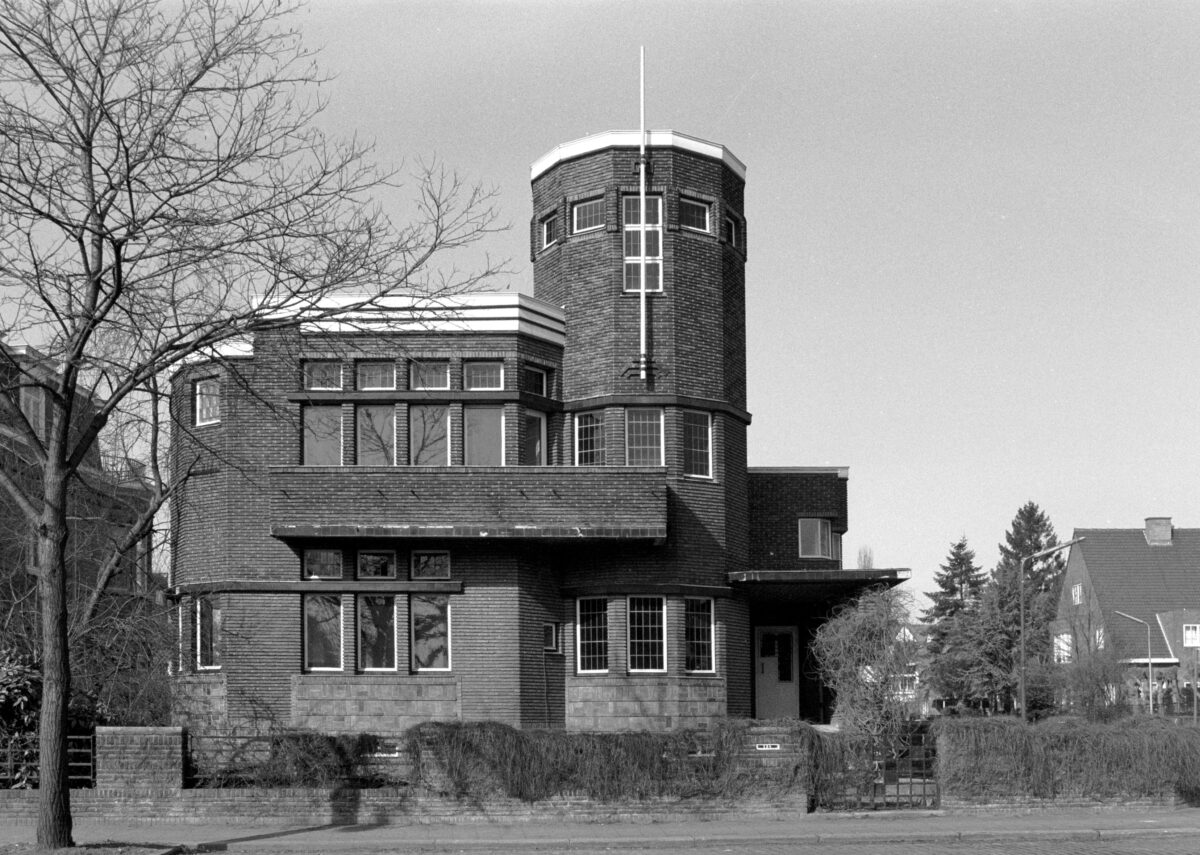
Villa De Bondt anno 1993 in the “Millionaires’ Quarter” in Ghent
Architect Jan-Albert De Bondt (Ghent, 22 August 1888 – Ghent, 18 March 1969) purchased, on 9 July 1928, a plot of building land measuring 716.03 m² at the corner of Krijgslaan and Vaderlandstraat.The subdivision of part of the site of the 1913 World Exhibition fit into the policy of expanding the city southwards, with an emphasis on residential living. What could be built there was determined by strict regulations, but the choice of architectural style was entirely free.Thus, the neighbourhood became a kind of showcase of the various architectural trends of the late 1920s and the 1930s, ranging from neo-styles and Art Deco to Nieuwe Zakelijkheid and international modernism. This diversity forms the richness of this corner of Ghent.The neighbourhood is also well preserved, and its protection as a townscape on 18 April 1994 safeguards the site from excessively intrusive alterations. Villa De Bondt, together with 23 other houses, was recognised as a listed monument in 2005.
The exterior
De Bondt drew up the final plans for his own house in 1929, and the building permit was issued in 1930. He designed a highly sculptural building composed of several volumes that each express the function of a specific space. This externalization of function, the complexity of the whole, the brickwork with decorative patterns, the playful use of brick as a material (for the plinth, he exposed the numbered underside of the bricks), and the bas-relief by Geo Verbanck all point to the influence of the expressionist architecture of the Amsterdam School.
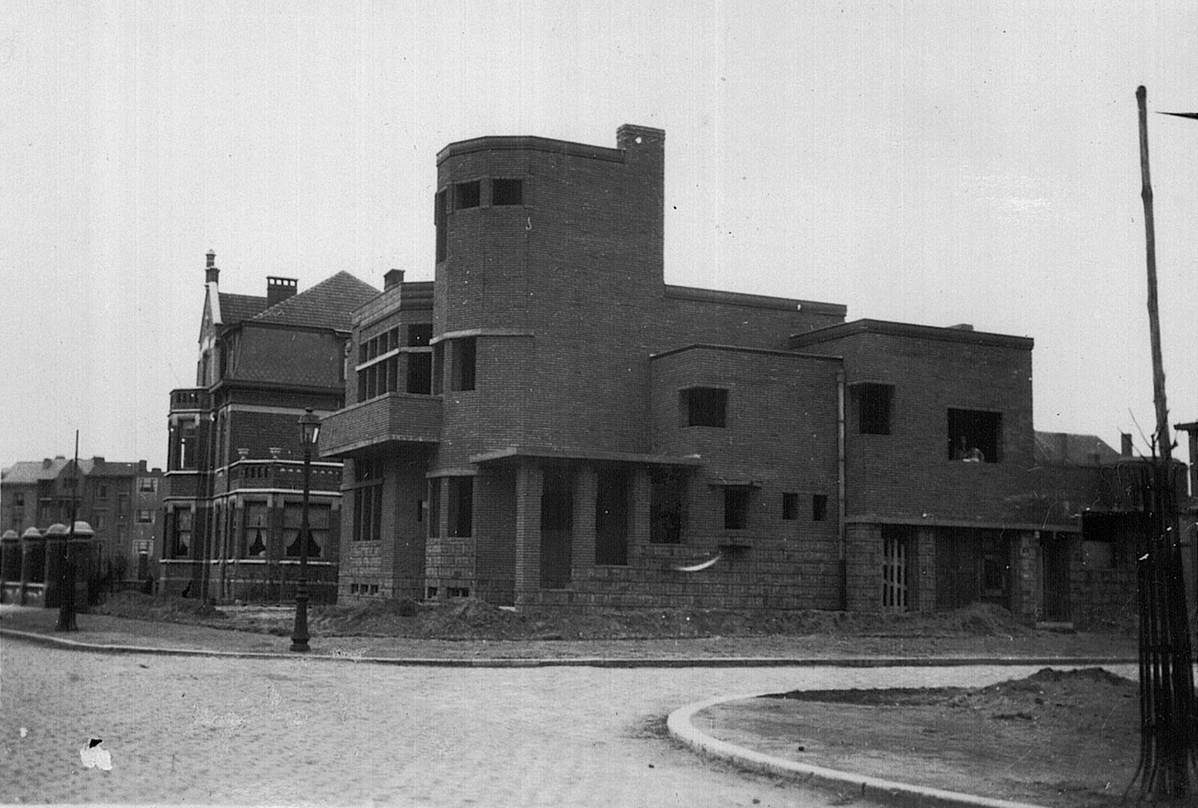
Villa De Bondt anno 1929 (archive Jan De Bondt)
The cubist volumes, the interruption of window sections with concrete lintels, the flat roofs, and the contrast between the vertical accent of the tower and the horizontality of the brickwork—further emphasized by a broad horizontal joint—indicate the influence of the romantic cubism of the Dutch architect W. M. Dudok. Since the building regulations of the neighborhood stipulated that only one quarter of a villa’s roofing could be flat, De Bondt must have obtained a significant exemption in this case.
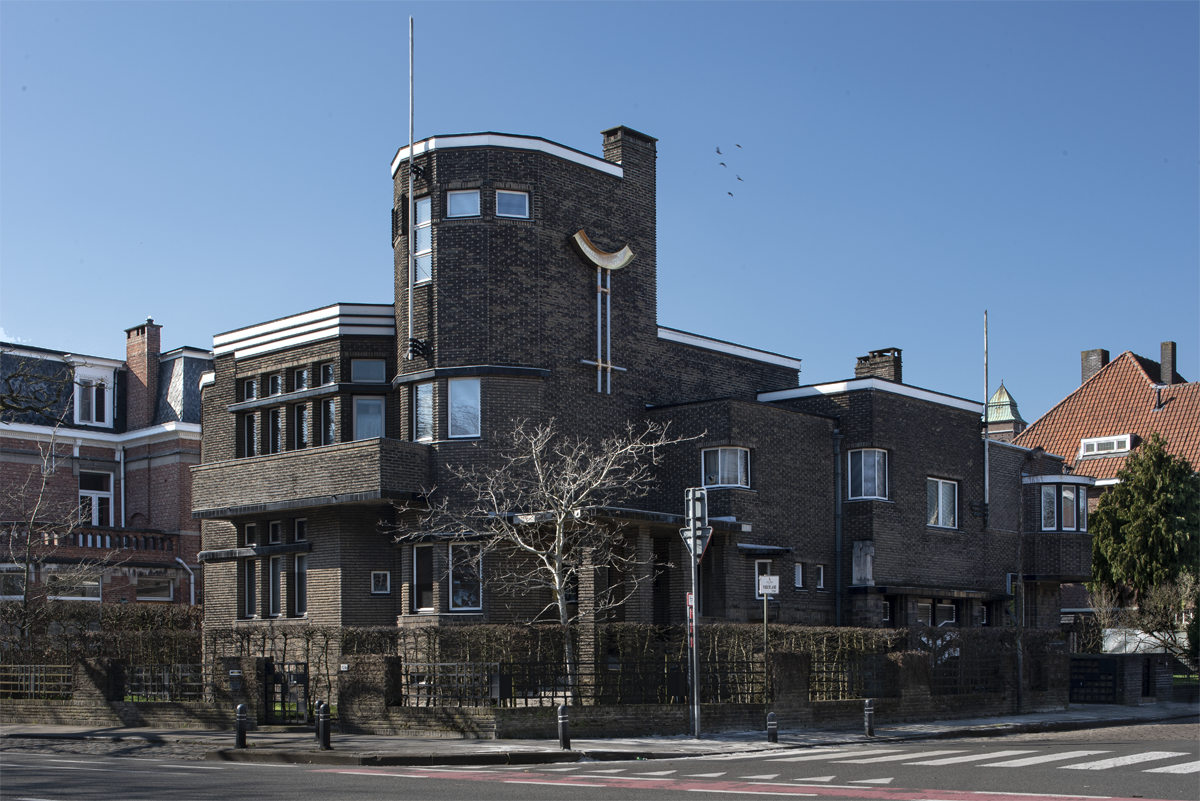
Villa De Bondt anno 2021
De Bondt introduced, with two striking flagpoles, an emerging trend in architecture: the streamlined aesthetics of the 1930s, an element that is even more prominently present in the entrance hall. The black-and-white painting of the woodwork and the matching tiling of the covered stairs leading to the entrance door are a late reminder of the Wiener Secession, while the stylised wing- or eagle motif on the garage door once again refers to the Amsterdam School.
“The interior
In the interior as well, De Bondt incorporated various extensions. Through a vestibule tiled in green and black, one enters an impressive entrance hall, in which the monumental staircase is particularly striking. The cladding of the stair wall with black and yellow tiles in an angular meander pattern further reinforces the cubist composition. The tiles were supplied by Clem. Houbens-Wallens, the Brussels importer of Céramiques Le Sphinx, and installed by J. Boxtaele & Ch. Vincent (Lousbergskaai 75, Ghent).
This rectangular composition is subtly interrupted by a bronze balustrade with a scroll motif, an element that can also be found in other designs by De Bondt. Also typical of De Bondt are the arched openings, here clad with silver leaf. The oval ceiling, with a recessed relief effect accentuated by indirect lighting using tube lamps, introduces the streamlined aesthetics of the 1930s into the interior.
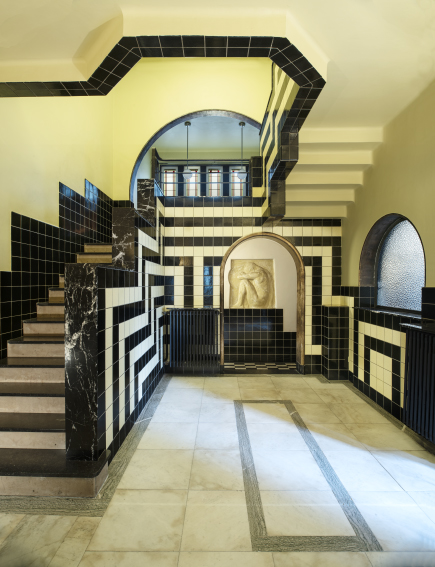
Stairwell seen from the consultation room
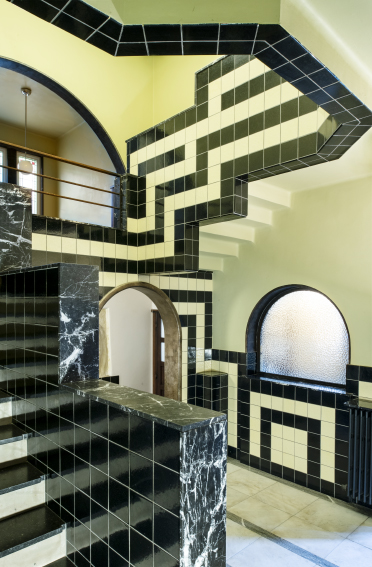
Stairwell seen from the front door
**On the left side of the hall is a consultation room located beneath the tower, with a view of both the Krijgslaan and the Vaderlandstraat. As with most other doors in the building, the entrance door consists of a wooden grid of small squares, partially glazed. Next to it, a wrought-iron door gives access to the living room. This door was originally filled with plain glass and screened on the inside with a curtain stretched over metal slats.
At the back of the entrance hall, a bas-relief by Olivier Piette draws attention. De Bondt himself purchased the stone used for the sculpture. At that spot, there is a doorway to the kitchen on the left—and formerly also to the studio—and on the right a doorway to the toilet and the service entrance.
The first floor essentially consists of three levels, on which the four bedrooms, the linen room, the storage room, and the bathroom are arranged. The spacious landing beneath a round arch originally looked out onto a terrace through five vertical windows, with an access door on the left side. The landing was originally furnished as a sitting area.
The bathroom, clad with white marble floor slabs and white and blue tiles, is still in its original state. In the tower, a room for the domestic staff was accommodated, accessible via a narrow built-in staircase.
The studio on the Vaderlandstraat—the architect’s workshop—was only one storey high and was topped with a roof terrace that opened onto the villa’s landing.**

Stairwell from the mezzanine
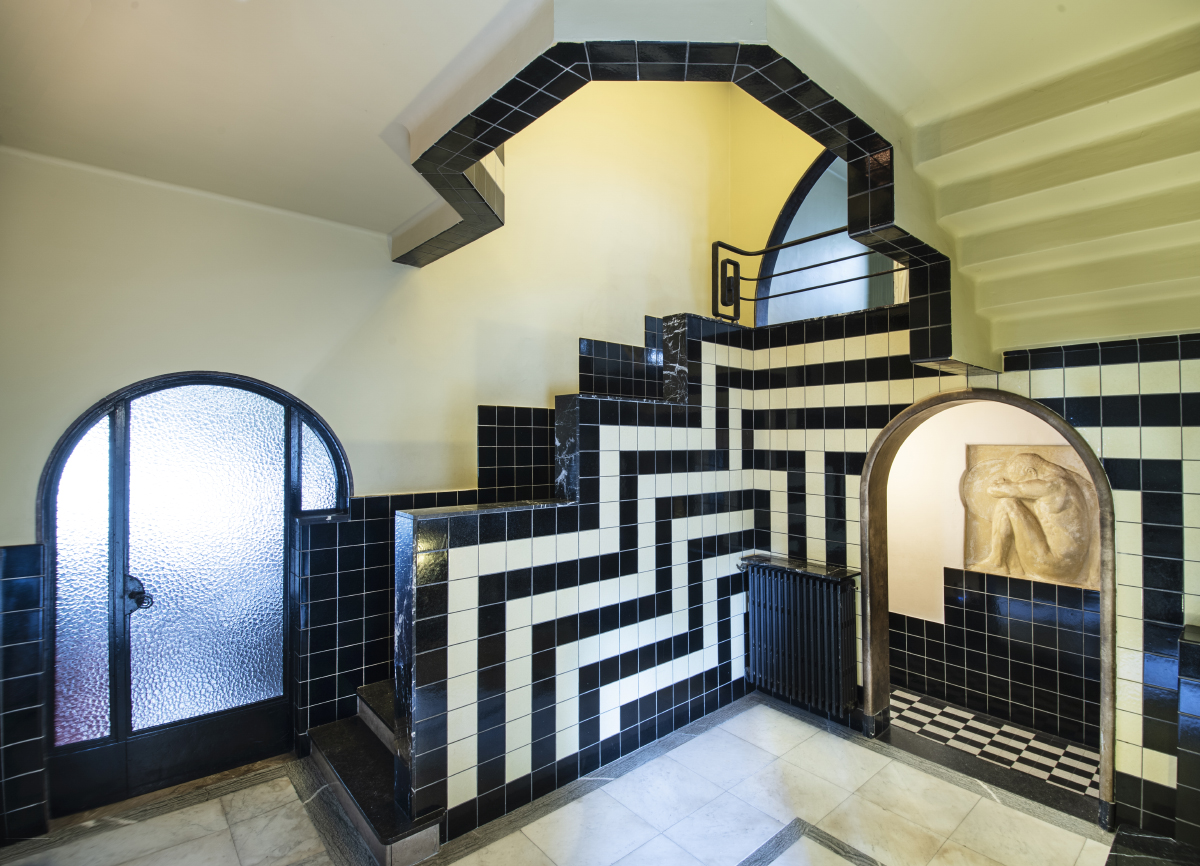
Stairwell seen from the front door
Towards Life
The sculpture by Geo Verbanck, “Vers la Vie” or “Towards Life,” has returned to Villa De Bondt after 52 years of absence. It now stands in the exact same place as it once did. After the death of Jan Albert De Bondt, the sculpture went to his son Albert in Bruges. It was his wife, Jeanne, and their children Hugo, Herwig, and Ulrike De Bondt who expressed the wish that the sculpture should return to Villa De Bondt.
The gilded plaster was beautifully restored by the recently deceased Niek Vermeulen.
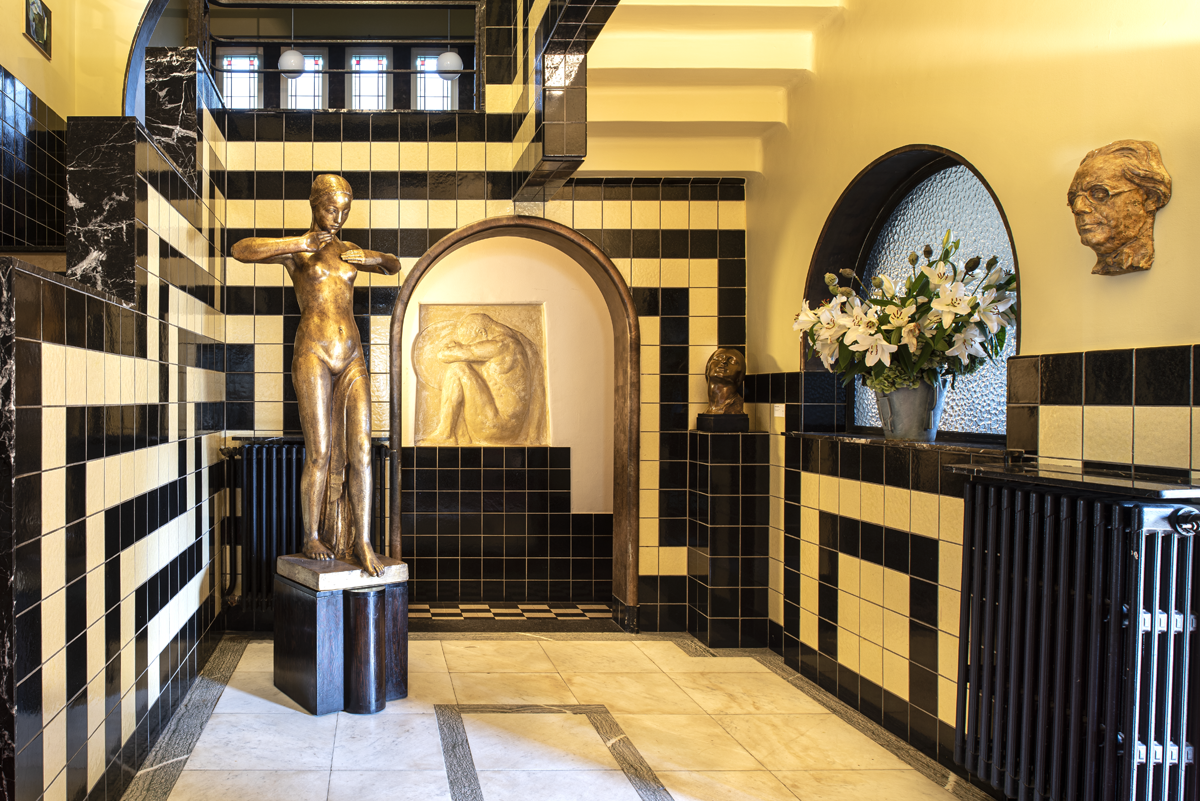
“Vers la Vie,” on the left in the photo, during the exhibition organized by the Geo Verbanck Foundation in 2018 at Villa De Bondt.
The consultation room
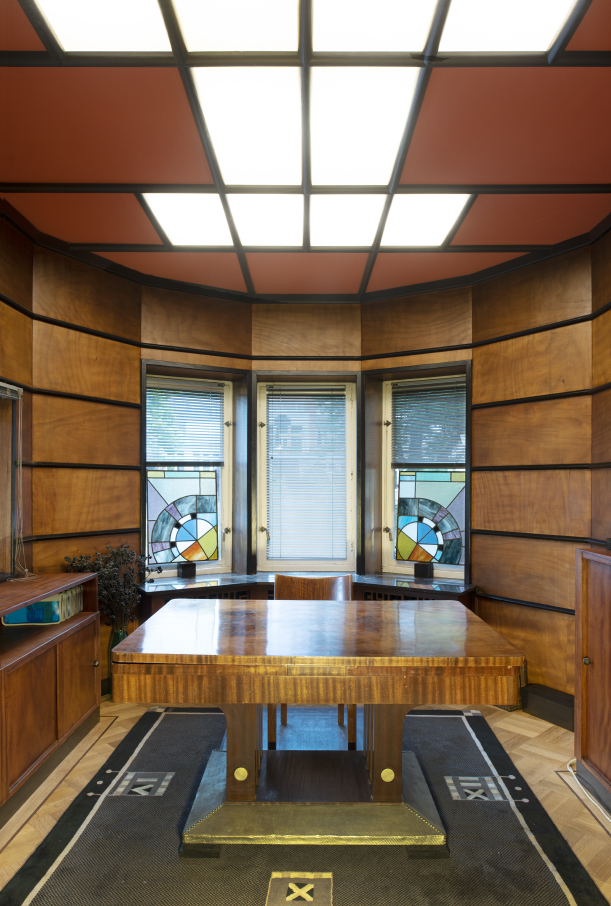
De spreekkamer met de recent aangekochte De Coene tafel
**The preserved bills and invoices do not indicate that the firm De Coene carried out the decoration of the consultation room. This room is not as richly executed as the living room.
Yet the choice of wall cladding with rectangular panels of tinted plywood or veneer, framed by black-painted strips, seems to point in the direction of De Coene. Jozef De Coene introduced the material into his company—after considerable effort—following a trip to America in 1921.
The ceiling of the consultation room features a geometric grid of rectangular painted wooden panels and frosted glass sections, which diffuse the lighting. The parquet floor is laid out in a diagonally placed checkerboard pattern.
The fireplace mantel, made of green and black tiles identical to those in the vestibule, indicates De Bondt’s contribution. The mantel extends into a small wooden bookshelf with a wall cabinet.**
The Living Room
Undeniably, the interior of the living room was executed by De Coene, presumably wholly or partially following designs by De Bondt himself. Unfortunately, the original drawings have been lost. Here too, we see a combination of round arches with horizontal lines, interspersed with triangular projecting elements. The quotation dated 18 February 1931 provides a very clear picture of the decoration. The literal text, copied from the original, reads:
“We provide the following types of wood: ‘Avodiré’ and walnut, or another preferred wood (fig. 2). Our decoration consists of the following: Wooden paneling above the fireplace, according to the drawing, with an applique. Along the right side, two display cabinets, which can be illuminated and are enclosed between two wooden moldings. Below, a large sideboard with solid doors and, inside, benches; alongside, a projecting section with drawers. All of this according to our drawing, including the small stained glass. The wooden paneling continues at the height of the sideboard, beneath the window, and connects to the arch. Two pedestals are attached to this arch. In the loggia, a bench taking the shape of this loggia, upholstered with fine velvet or leather (fig. on p. 12). The paneling continues along the window directly above the fireplace and joins in the corner with the sideboard, according to the drawing—i.e., below with doors and drawers, inside with shelves, and on top with display cabinets. The wall covering extends further up to the small arch opening onto the hall. This arch is also partially covered.”
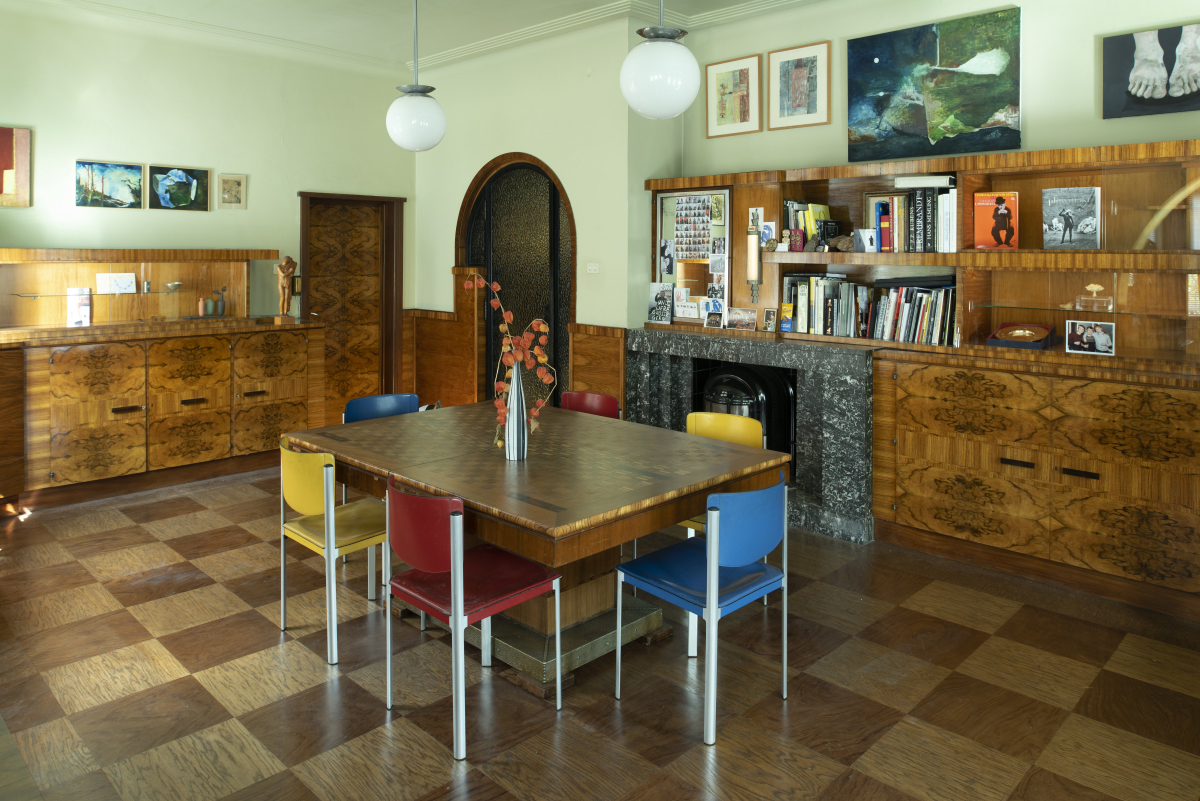
The living room in 2020, designed by De Bondt and executed by De Coene
The description in the quotation corresponds closely to the execution, as an order was recorded on 23 February 1931 that largely matches the offer. One deviation is the upholstery of the loggia bench in leather. The firm De Coene also promised to provide radiator covers integrated into the wooden paneling at no extra cost and to supply two club armchairs, to be chosen by De Bondt. A few details can still be clarified. Above the stepped marble fireplace is indeed an applique, a lighting element made of softly chrome-plated metal, originally fitted with frosted glass.
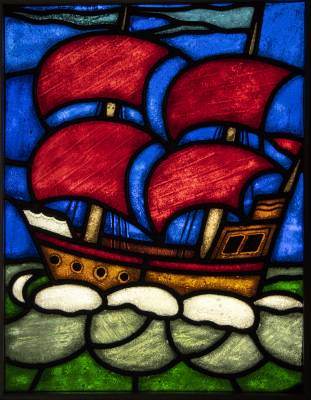
To its left, a large mirror is installed. To the right of the display cabinet, there is a painted window depicting a sailing ship—the only stained-glass window that survived the damages at the end of the Second World War. The cubist design, the horizontal lines, and the triangular projecting parts of the fixed furniture fit perfectly with the villa’s exterior appearance.
The quotation of 18 February 1931 also mentions the upholstery of the living room. Over time, this has disappeared, along with much of the loose furniture that was also offered:
“A round table for the loggia. A large rectangular table of 1.20 x 1.80 m with extensions for 24 people. Six chairs upholstered in velvet or leather. Two armchairs likewise.”
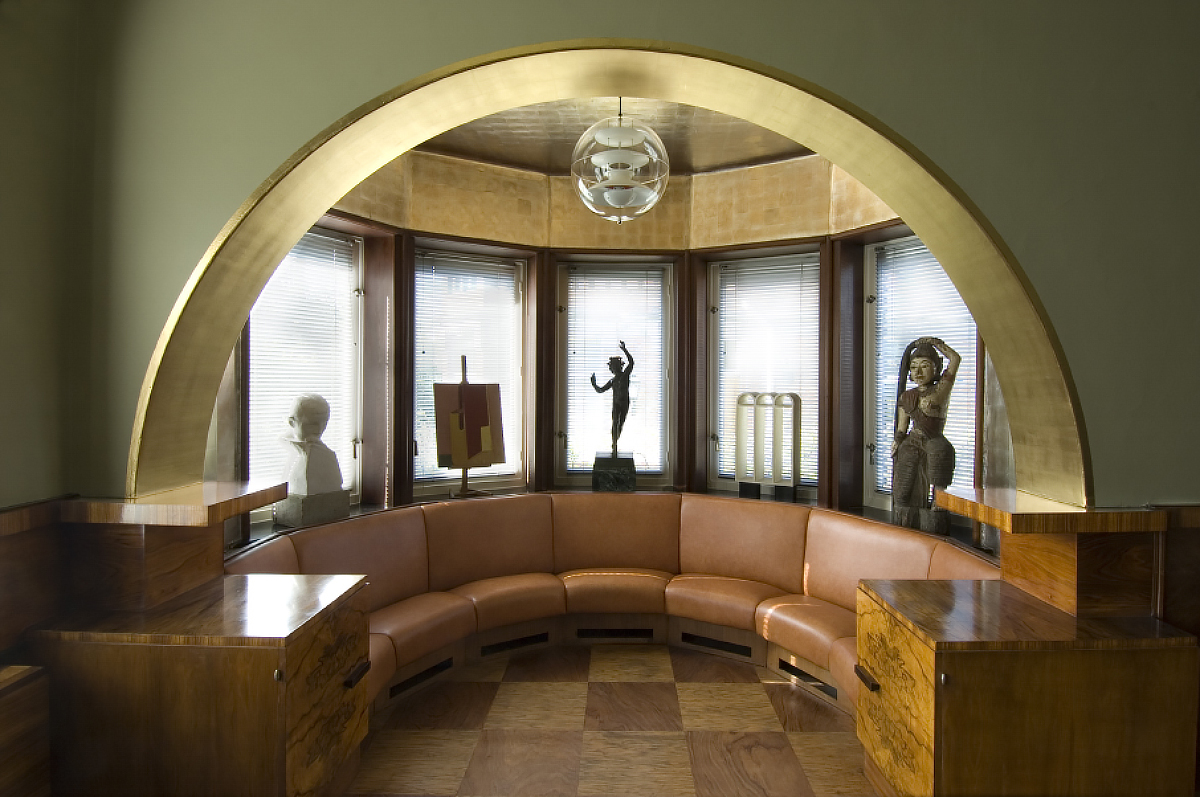
The loggia after renovation in 2012
In the order recorded on 23 February, the chairs were replaced by six armchairs. However, only the large dining table with a checkerboard pattern remains in the villa today. The parquet floor with a checkerboard pattern of large squares, originally noted in De Coene’s 23 February order, is still original.

Cabinet in the living room, designed by De Bondt and executed by De Coene in avodiré and walnut burl


Various details of the burl wood in walnut
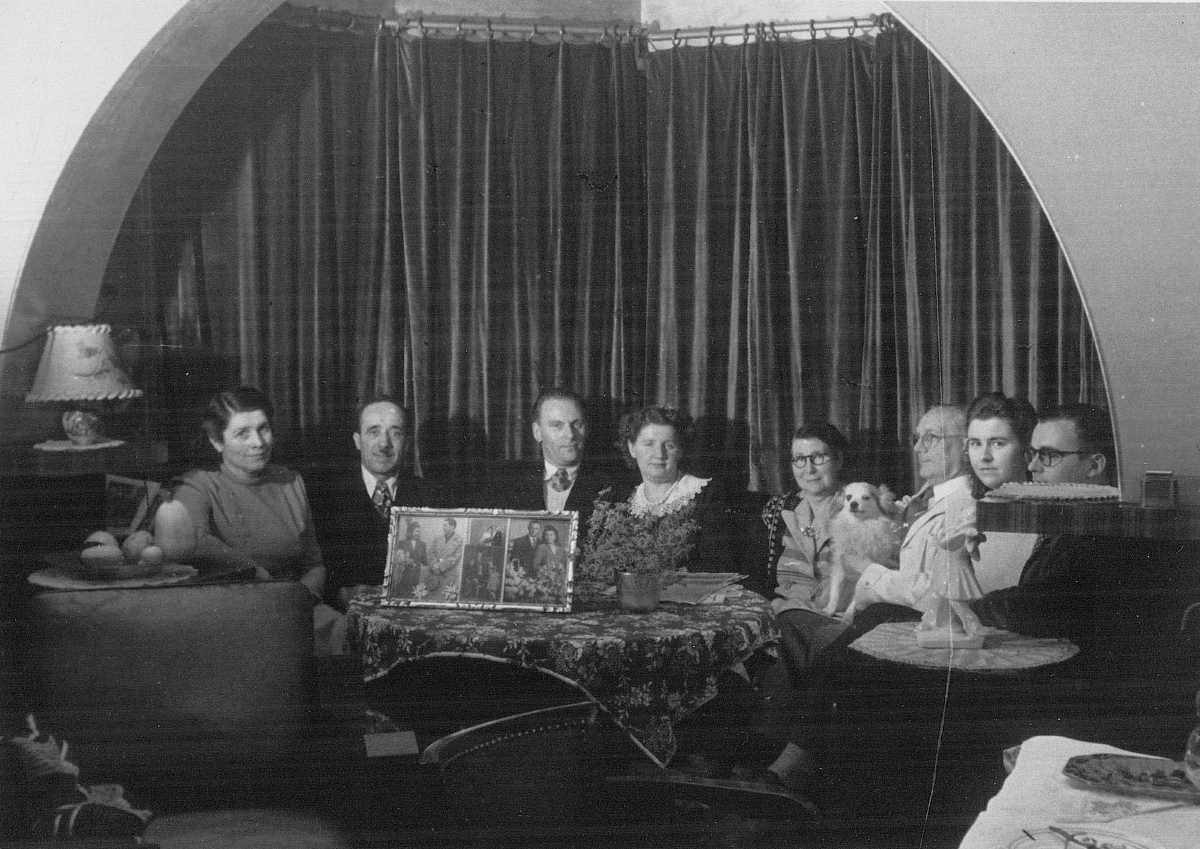
The Loggia during that time of Jan Albert De Bondt (third from right), wiyh the original round table.

The loggia with the current residents Foto:Maciej Plewinski

The living room during the time of Jan Albert De Bondt (left) with the original chairs
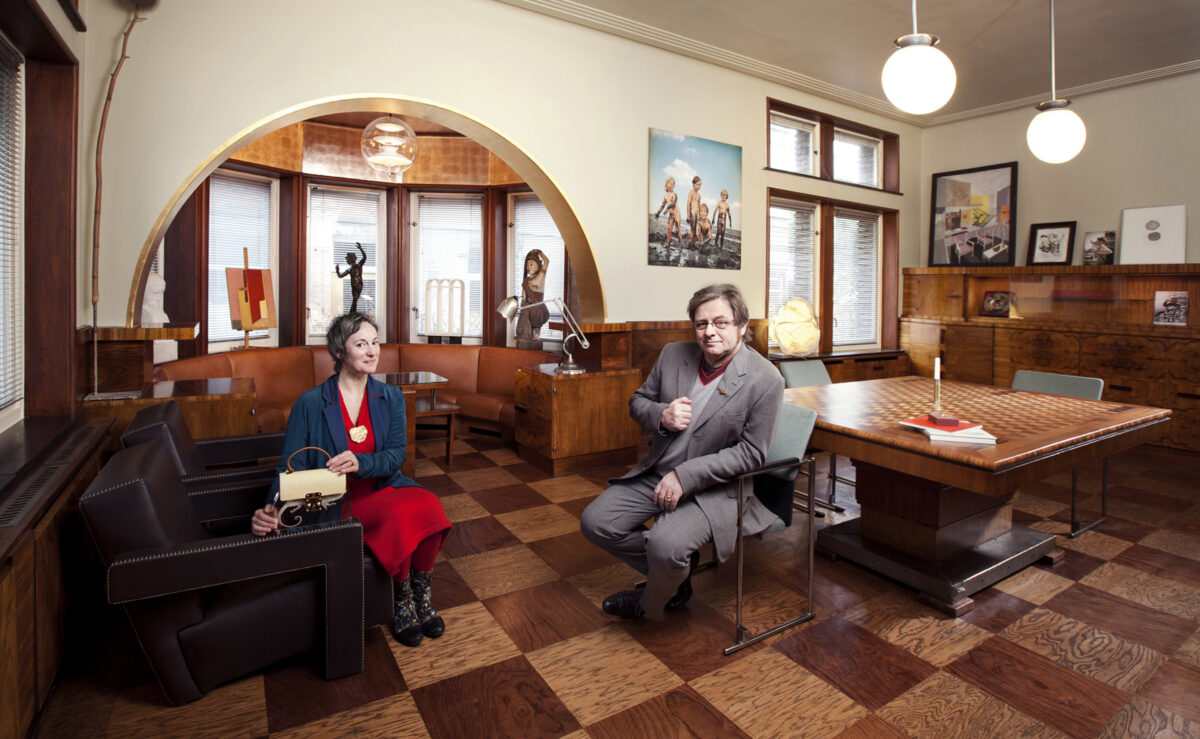
Miek De Brauwer and Wim Vandekerckhove in the living room. foto Alexander Populier
Miek De Brauwer and Wim Vandekerckhove in the living room, circa 2015 ©Alexander Popelier
The stained glass windows
De Bondt used stained glass in many of his designs, with the villa for Leon Verbreyt as the pinnacle. Unfortunately, at present, we can no longer compare the glazing of his own home with that of Villa Leon Verbreyt. The heavy shelling of part of Ghent in September 1944 destroyed the studio’s windows. A V1 fell near the villa in January 1945 and destroyed all other glass windows. A similar concept determined the appearance of both residences: a complete filling of large vertical windows, with only the transoms filled in horizontal windows. Who designed the stained glass, colored glass, or industrial glass panels is unclear due to the lack of good photographic material, design drawings, or descriptions. Five stained glass windows were designed by De Bondt himself: representing architecture, sculpture, painting, music, and literature.
The other windows, or part of the other windows, are said to have been designed by Albert Saverys, who was then a designer at De Coene. Arthur Deleu is also mentioned, although his name does not appear in the available correspondence. A photograph in Bâtir shows that the tower was decorated with stained glass composed of geometric patterns. The only surviving colored glass—the little boat in the living room—was designed by Karel Noppe. All the stained glass was executed by De Coene, as evidenced by a letter dated 18 September 1930, the price quote of 18 February 1931, and the order note of 23 February 1931. Unfortunately, no details were included in the letters. An overview of the number of stained glass windows is only provided in the war damage assessment report, prepared on 15 March 1945 by architect Franz Langeraert. This report reveals the considerable damage, not only to the glazing but also to the masonry, plasterwork, and woodwork.
“The Little Ship” – the only surviving stained glass window, designed by Karel Noppe
Recente renovatie van Villa De Bondt
The Decoration of Villa De Bondt – Supplement
The loggia was restored to its original state: the niche lined with silver leaf and the arch with gold leaf. The armchairs were reupholstered in aniline leather. The marble surrounding the fireplace was also restored.Painter Robert Clicque, together with the Monuments Authority, conceived the original colors of the salon and the stair hall. Clicque was one of the leading artists in the 1970s when Villa De Bondt housed the Wittepoppentoren art gallery.The renovation of the lighting in the cabinets and stair hall was carried out by Stefaan Van Wambeke. The parquet floor in the study was restored by Wim Van Vynck.The sculpture by Fritz Maierhofer on the side facade was regilded with double gold leaf. The corner relief by Geo Verbanck was cleaned by Niek Vermeulen.After extensive searching, a smaller model of the dining table (by De Coene) was recently acquired and placed in the study. The six dining chairs had previously been offered at an exceptionally high price, which Villa De Bondt did not accept.
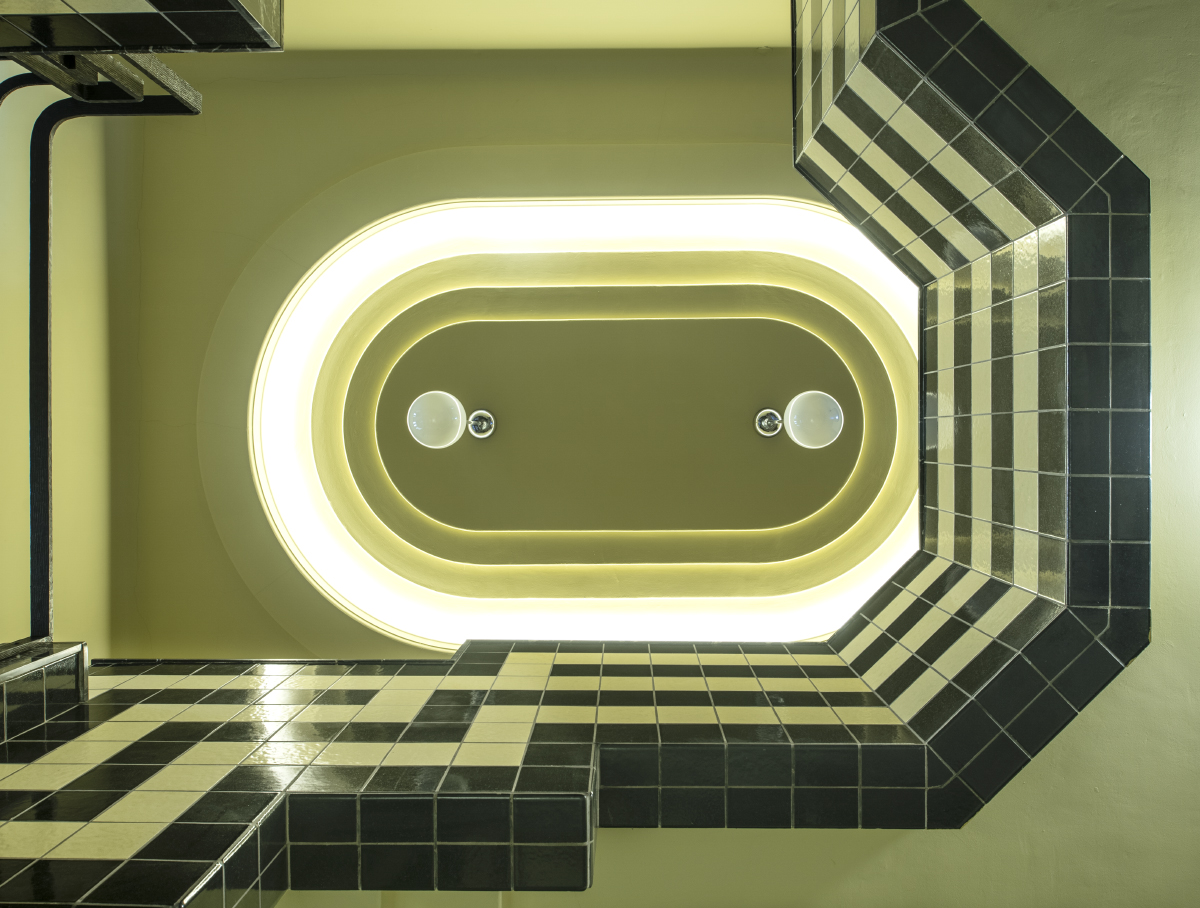
Renovation of the Oval Light in the Stair Hall
Renovation of the Spirit of Villa De Bondt
The house has always been a meeting place for artists. In the time of Jan Albert De Bondt, artists such as Georges Minne, August De Smet, Olivier Piette, Geo Verbanck, and many others were regular visitors.In the early 1970s, the art gallery “De Wittenpoppentoren” held exhibitions featuring, among others, Robert Clicque, Danny Matthys, and Gustaaf Renier.Since 1993, Villa De Bondt has hosted exhibitions with world-renowned jewelry artists, including David Watkins, Gerd Rothmann, Hermann Jünger, Robert Baines, Ted Noten, and Michael Becker.Events have been organized in collaboration with the Royal College of Arts, London, and the Pinakothek der Moderne in Munich.
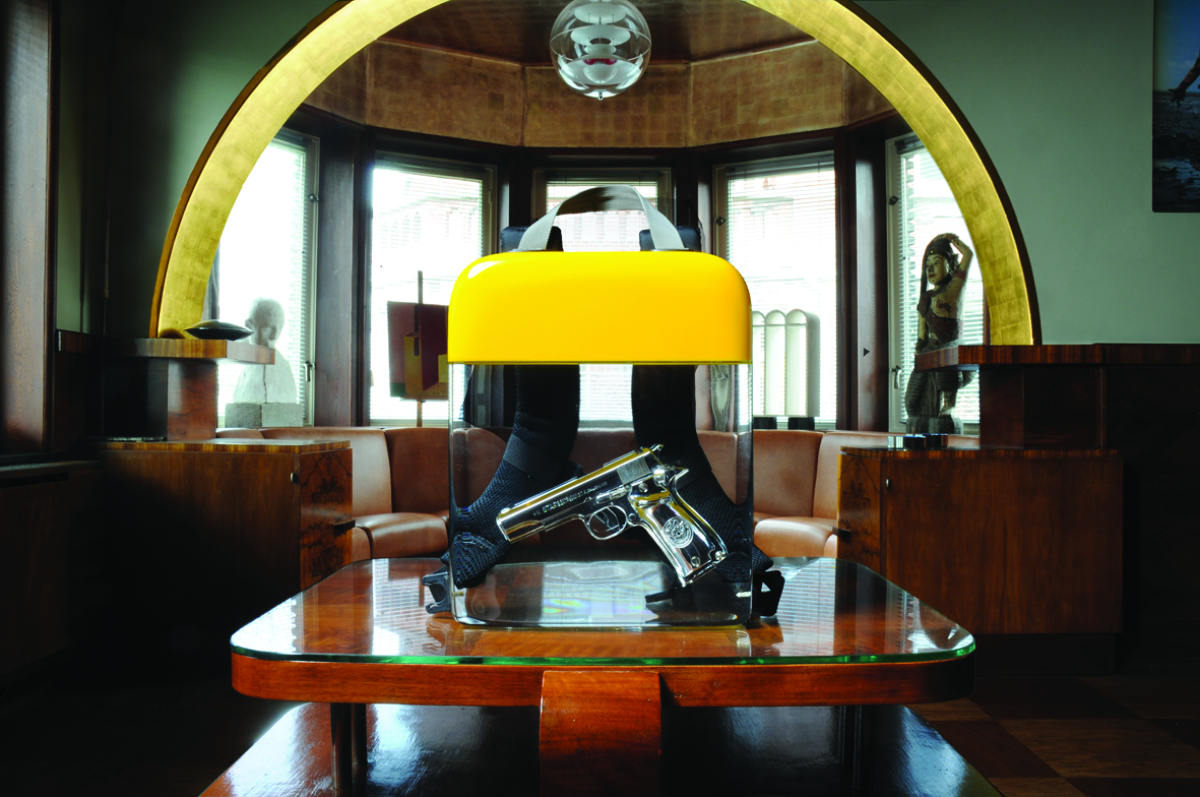
Ted Noten in Villa De Bondt
Publication and Film Recording
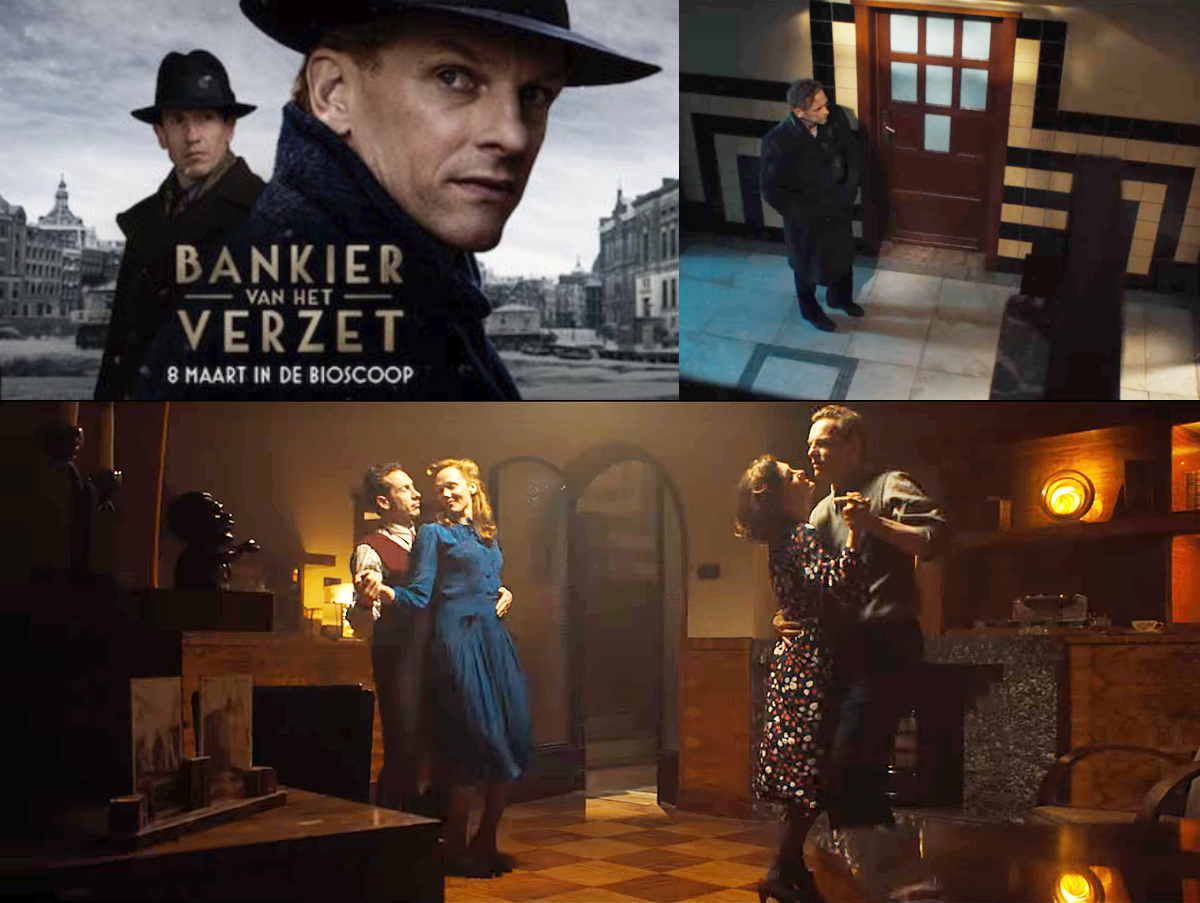
Many articles have been published in newspapers and magazines, including De Standaard, Knack, Prze Kroj, Sabato, Décors, and others.In 1994, the book The Wedding Collection by Pierre Loze and Guido Jan Bral was published.Villa De Bondt has been featured several times in the media, including VRT, VTM, and Vitaya, such as in the series De vloek van Vlimovost (2004), featuring Josse De Pauw, Barbara Sarafian, and Antje De Boeck in a production by Patrick De Witte.Scenes from the Dutch feature film De bankier van het verzet (2018, directed by Joram Lürsen) were filmed at Villa De Bondt.
The Fate of Villa De Bondt
Jan-Albert De Bondt accepted the position of director of the Ghent Academy of Fine Arts during World War II. On 12 November 1946, the City Council decided to dismiss him from his post, retroactively effective from 1 October 1944. De Bondt found almost no work and devoted a great deal of time and money to his defense, which initially seemed promising. Nevertheless, his dismissal was confirmed by the governor of the Province of East Flanders on 31 May 1950. All of this meant that his residence could only be partially restored. There was certainly no question of restoring the stained glass windows. In 1948, the studio was converted into a separate dwelling, and an additional floor was added to the roof terrace.After Jan-Albert De Bondt’s death, the house itself was sold. Most of the movable furniture disappeared at that time. For two years, the art gallery “Wittepoppentoren” was housed there. The fixed interior of the residence remained unchanged, but the “disturbing” yellow and black tiles were covered with sheets of white paper. Later, the house was rented to students until 1976.Then a family moved into the villa. It may be considered a miracle that the interior survived these numerous changes largely intact, until 1993, when the renaissance of Villa De Bondt finally began: Willem Vandekerckhove and Miek De Brauwer purchased the villa as both a home and a gallery for contemporary jewelry: the New Jewels Gallery. Gradually, they restored the exterior and interior.They organized exhibitions and ballet performances and always tried to establish a connection with De Bondt’s architecture. In this way, the villa regained an artistic function, which continues to be developed for the future.
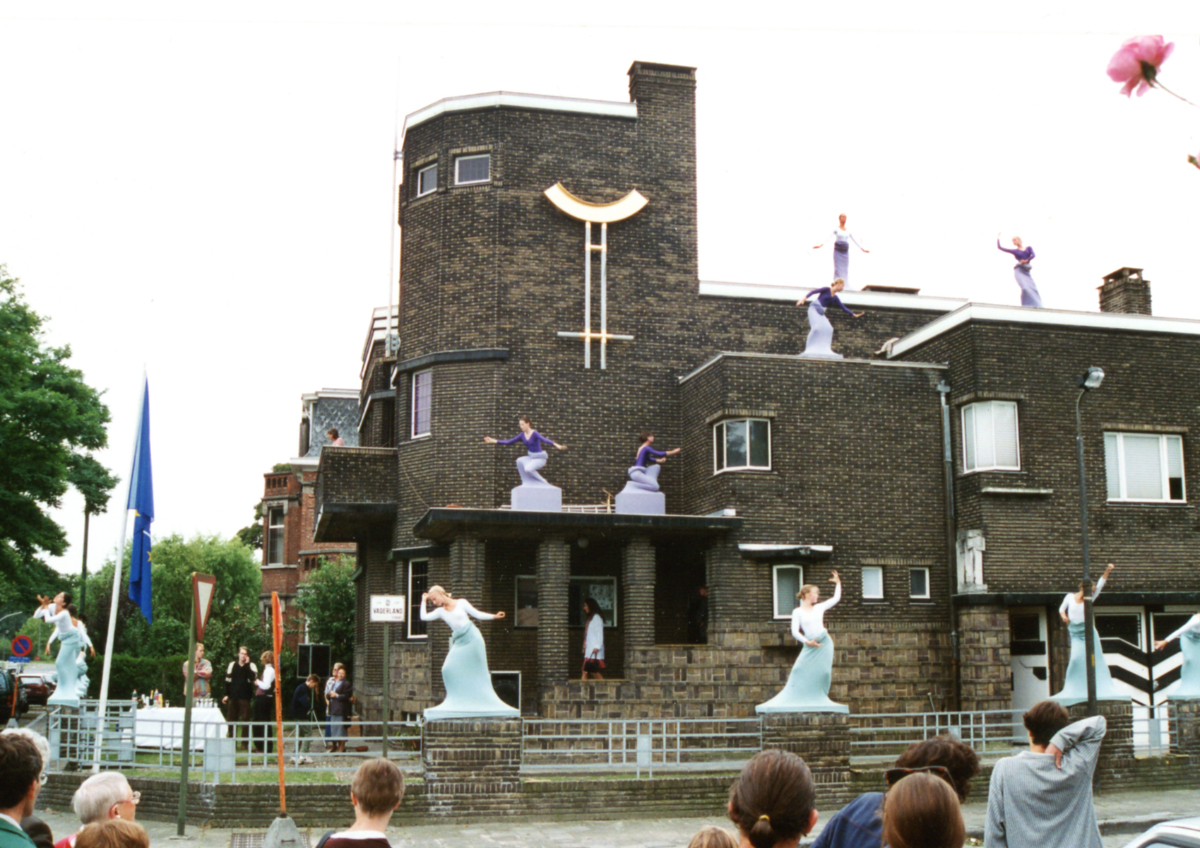
“Living Sculptures” Choreography by Miek DeBrauswer, iby sketches of Antoine Bourdelle and the music of Villa Lobos, Bachianas Brasilieras
Villa De Bondt Reunited After 67 Years
In 1955, Jan Albert De Bondt divided his villa so that his daughter and her family could live alongside him. When, after De Bondt’s death in 1970, the front historic section was sold, the division became permanent. His family continued to live in the annexed section until the great-grandson left the property on 1 April 2022. In this way, the villa was reunited after 67 years. On the first floor above De Bondt’s former studio, an exhibition space has now been created.
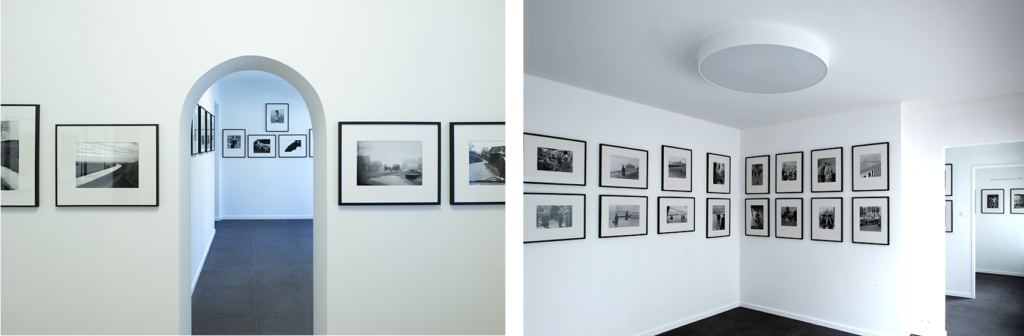
“The new exhibition space, with on the left the opening from the old to the new section”
Concise Bibliography
DEMEY, A.: De Verbreytsite in Sint-Niklaas: Opmerkelijke interbellum architectuur van Jan-Albert De Bondt (1888-1969J. Sint-Niklaas, 1997.
DEMEY, A. & POULAIN, N.: Jan-Albert De Bondt, architekt. Gent, 1994.
DE SMET, Y. & POULAIN, N.: Van kromme tot rechte. Architectuur en toegepaste kunsten in de provincie Oost Vlaanderen van 1920 tot 1940. Gent, 1979 (Cultureel Jaar boek voor de Provincie Oost-Vlaanderen. Bijdragen. NR. 9).
DUJARDIN, F.: JA. De Bondt (1888-1969): monografie over een architect en zijn werk. Gent, 1994
(Onuitgegeven licentiaatsverhandeling RUG).
DUJARDIN, F.: J. A. De Bondt: een Gents architect uit het Interbellum, in: De Woonstede door de Eeuwen Heen, nr. 111, 1996.FLOUQUET, P. L.: De Bondt ou du romantisme à l’architecture industrielle, in: Bâtir, nr. 26, 1934.
J.A. De Bondt: eigen woning, in: Architectuur te Gent: analyses. Gent, 1978.
MEGANCK, L.: Het Miljoenenkwartier te Gent (1926-1940):
spiegel van het Gentse architectuurgebeuren in een bewogen tijd. Gent, 1994 (Onuitgegeven licentiaatsverhandeling RUG).
MEGANCK, L.: Het Miljoenenkwartier te Gent: een woonwijk uit het interbellum, in: De Woonstede door de Eeuwen Heen, nr. 113, 1997.MEGANCK, L., m.m.v. POULAIN, N. & DEMEY, A.:
Het Miljoenenkwartier, een Gentse woonwijk uit het interbellum. Gent, 1995 (Kleine Cultuurgi,d,sen).POULAIN, N.: Interbellum-interieurbezoek 40. Villa de Bondt/ New Jewels Gallery, in: Interbellum-Interieurbezoeken, Gent, 1994.
VANDENBREEDEN, J. & VANLAETHEM, F.: art deco en modernisme in België: architectuur in het interbellum.
Tielt, 1996 (Architectuur in België).
Verslag over het bestuur en den toestand der Stad Gent. Rapport sur l’administration et la situation de la Ville de Gand. 1928.